


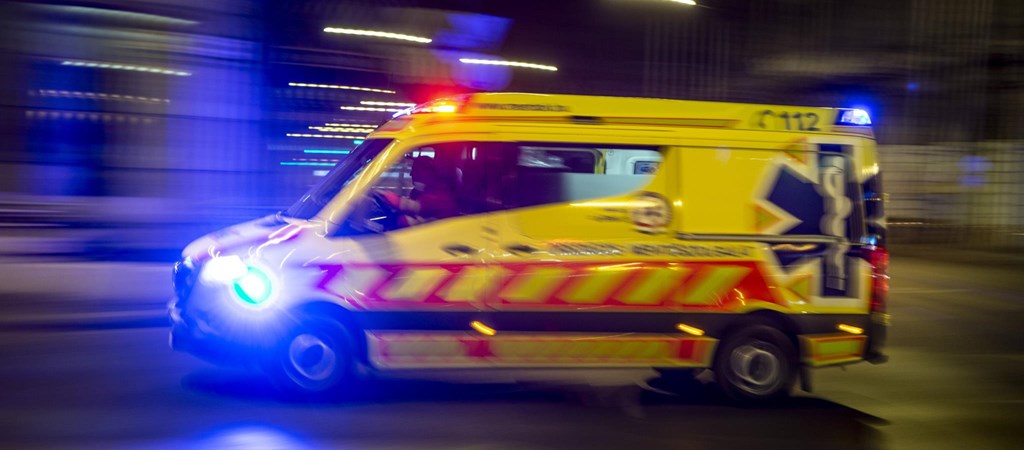
Hungary’s National Ambulance Service (OMSZ) has published its response times for September. According to the data, an ambulance unit reached 90 percent of the most serious emergency cases within 25.75 minutes. The stated target is to reach 90 percent of the most serious cases within 15 minutes.
In a statement sent to the Hungarian news agency MTI late Thursday evening, the OMSZ said ambulances were dispatched to 84,963 cases nationwide and 15,903 cases in Budapest across emergency categories P1–P4.
The number of cases fell by 11 percent nationwide and by 5.8 percent in Budapest compared with August. However, compared with September 2025, the number of cases was 2.4 percent higher nationwide and 3.1 percent higher in Budapest.
In September, 10,638 cases nationwide were classified as P1, the most urgent category—1,198 fewer than in August. Ambulance units reached three-quarters of P1 cases within 20.10 minutes and 90 percent within 25.75 minutes.
In Budapest, the time within which ambulances arrived at 75 percent of cases fell by eight seconds to 19.84 minutes, while the time within which they reached 90 percent of cases increased by eight seconds to 24.89 minutes.
In the other emergency categories, the nationwide response time for P2 cases decreased by 1 minute 11 seconds and for P3 cases by 20 seconds compared with August. For P4 cases, it increased by 2 minutes 34 seconds.
For the most urgent cases, the lowest 90-percent response time was recorded in the Western Transdanubia region, at 23.16 minutes, while the highest was recorded in the Central Hungary region, at 27.75 minutes.
The statement emphasizes that these figures measure response times and, on their own, do not measure the quality of medical care.
The 15-minute target means that an ambulance unit should reach 90 percent of P1 cases within that time.
The September figure of 25.75 minutes represents an improvement compared with August, but it also shows that significant progress is still needed in this area, the OMSZ emphasized.
The National Ambulance Service publishes both improving and worsening figures every month.
The statistics measure the entire period from the start of the 112 emergency call until the ambulance unit arrives at the scene. As a result, the figures cannot be directly compared with earlier reports that calculated response times from a later point in the process. Detailed nationwide, Budapest, and regional data, as well as downloadable datasets, are available on the stat.mentok.hu website.
At the end of August, the ambulance service announced that starting in September it would publish response-time data broken down by nationwide, Budapest, and regional figures, as well as by severity of cases, together with the number of cases.
(MTI)

