


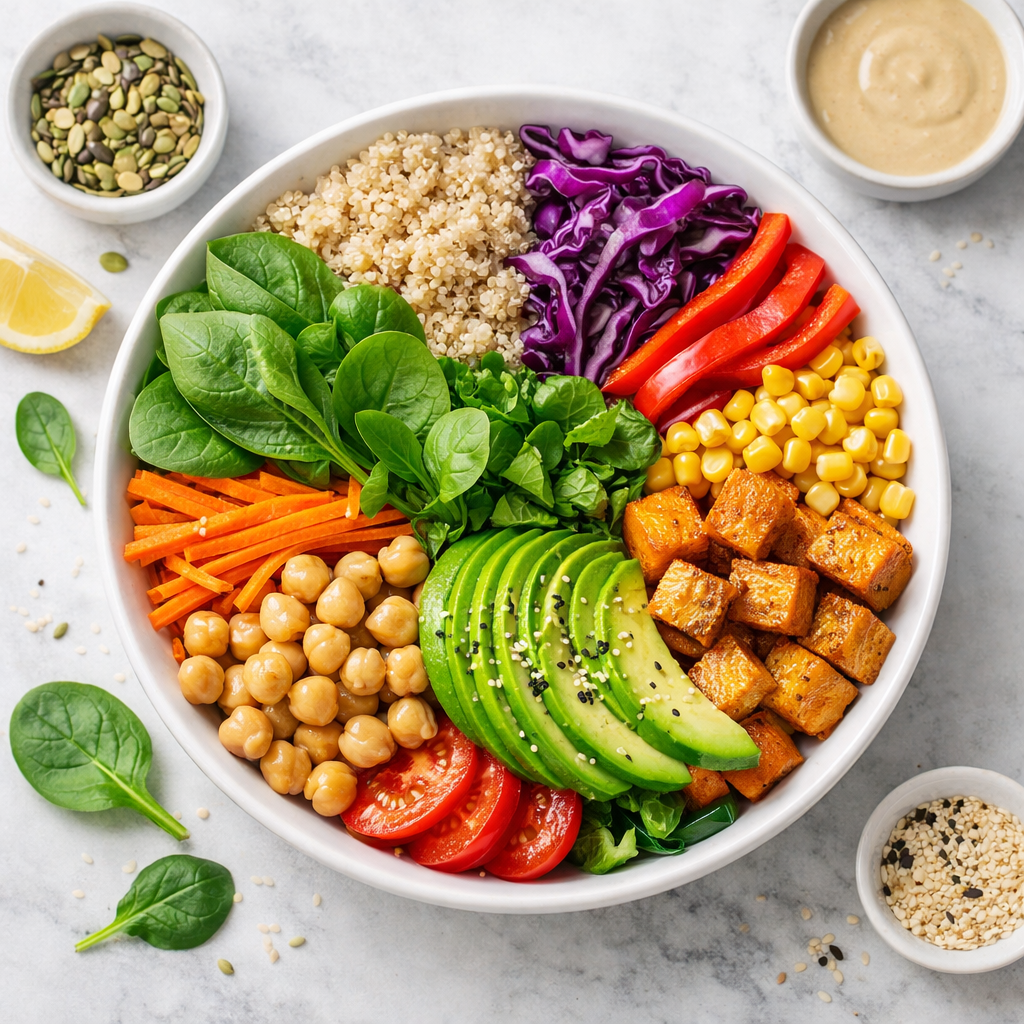
In recent years, the number of people who consciously reduce their meat consumption or eliminate it entirely from their diets has increased significantly. Plant-based nutrition is not just a trend: for many, health, ethical, or environmental considerations lie behind the decision. However, the different meat-free diets can easily confuse those interested, as there are several approaches from flexitarian to vegan, each with different rules and perspectives.
The Basics of Plant-Based Nutrition
Plant-based diets focus primarily on vegetables, fruits, grains, and legumes. The idea is to place natural plant ingredients on the plate instead of animal products and heavily processed foods. It is important to emphasize, however, that this does not refer to a single strictly defined diet. There are several variations, which differ in how much they allow the consumption of animal-based foods.
The popularity of this nutritional approach can partly be explained by the fact that many people consider it a healthier lifestyle. According to research, a well-planned vegetarian or vegan diet can be rich in nutrients and typically contains more fiber, vegetables, and fruits than a traditional diet.
Flexitarian, Vegetarian, or Vegan?
Among meat-free diets, one of the most flexible approaches is the flexitarian diet. This is mainly plant-based but occasionally allows the consumption of meat, especially white meat. The goal is not the complete elimination of meat but rather reducing its amount.
The vegetarian diet is stricter: meat and meat products are excluded. However, there can be differences between its variations. Ovo-vegetarians consume eggs, while lacto-ovo vegetarians include both eggs and dairy products. The pescatarian diet allows fish but excludes other types of meat.
The Vegan Diet
The vegan diet excludes all animal-derived foods, meaning that meat, dairy products, eggs, and even honey are not part of everyday meals. Many vegans avoid animal-derived products not only in their diet but also in their overall lifestyle.
More Than a Diet: Lifestyle and Conscious Choice
Today, meat-free nutrition represents much more than a simple diet. The decision is often driven by health, environmental, or animal-welfare considerations. Some studies suggest that followers of vegetarian diets may have a lower risk of certain diseases, partly due to higher vegetable and fiber intake.
At the same time, it is important to keep in mind that a meat-free diet is not automatically healthy. Balanced nutrition requires adequate protein intake, and in some cases supplementation of certain vitamins—such as vitamin B12—may also be necessary. Among the various dietary approaches, everyone chooses the one that best fits their lifestyle and values.
Bea Szöőr’s article in Hungarian can be found here.
Source: https://szupermenta.hu/barangolas-a-husmentes-etrendek-utvesztojeben/


