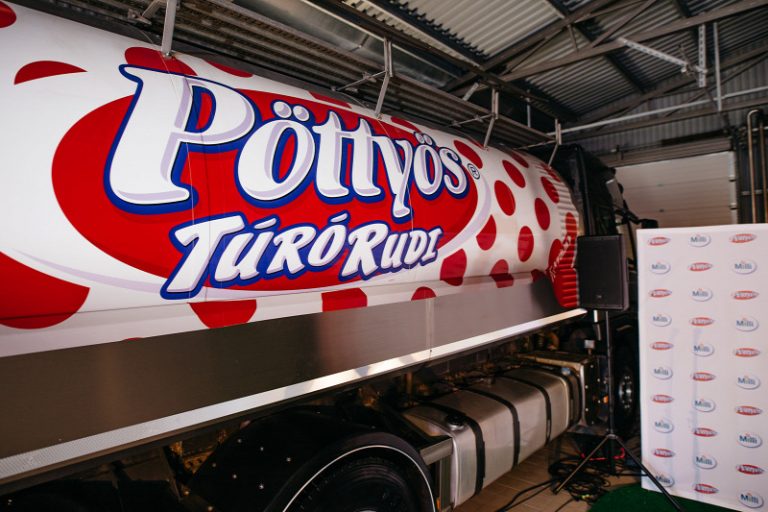
In the 1960s, Hungary underwent numerous transformative changes, which were reflected even on store shelves. Among the new products arriving were so-called “mood-enhancing” items—not only alcoholic beverages in this case.
During the era of the New Economic Mechanism, on June 17, 1968, the first Hungarian bottled Coca-Cola production began, and around the same time, one of the country’s most famous sweets, Túró Rudi, was born. The inspiration came from a study trip to Moscow: dairy industry experts began developing a flavor combination previously unknown in Hungary. They created a slightly lemony, sweet curd coated in chocolate, which quickly won over consumers.
When the name caused a stir
In the 1960s food industry, it was uncommon to develop a marketing strategy for naming and launching a new product. The Budapest Dairy Company recognized the importance of advertising and enlisted psychologist Mihály Vaszkó for the naming task. He eventually delegated the assignment to his colleague Sándor Klein. Together with his students, Klein not only designed the product’s branding but also gave the sweet its name.
However, the name “Túró Rudi” did not meet with universal approval. According to recollections, the ads were already in print when the head of the publishing company’s advertising department deemed the name immoral and blocked the campaign. As a result, the product began its triumphal journey without advertising.
Production couldn’t keep up
It’s unclear whether the advertising ban contributed to its popularity, but the novel flavor quickly met Hungarian consumers’ tastes. Production soon outgrew its Budapest facility and moved to Mátészalka in the early 1970s. Demand was so high that fulfilling it remained a serious challenge for a long time. Initially, the product’s shelf life was only three days—one of which was spent in transport—but this wasn’t a problem because it sold almost immediately upon reaching stores.
The “Dotted” Brand
In the early years, Túró Rudi was primarily available around the factory and in the capital. As production increased, it gradually became available nationwide.
By the 1980s, additional factories joined production alongside Mátészalka. The now-famous slogan “A Pöttyös az igazi” (“The Dotted One is the Real Deal”) appeared during this period. Thanks to technological advancements, the shelf life was also extended significantly—to 14 days.
After the regime change
The 1990s brought changes for the product as well. More flavored varieties appeared on store shelves, including apricot, strawberry, and hazelnut. In Mátészalka, development continued while preserving the original flavor: modern production methods were implemented, but the core recipe principles were maintained.
New directions in the 2000s
After the turn of the millennium, the brand launched with new designs and product lines. Limited editions, such as the Bonbon, were so successful that the factory initially struggled to meet demand. Following this, new innovations followed one after another, including GURU, Pöttyös Tejsüti, and various versions of Fitt Pöttyös Túró Rudi.
In early 2026, Pöttyös introduced several new items for Túró Rudi fans, including Lemon Cream Pöttyös Túró Rudi and Peanut Butter Pöttyös Protein Rudi. The product line continues to expand, as hints on Pöttyös’ website suggest even more flavors will soon appear on store shelves.
Bea Szöőr’s article can be found here in Hungarian.