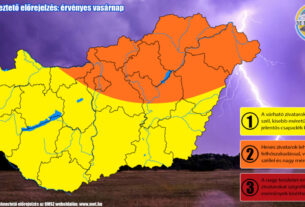
After the recent warm weather, a southwesterly airflow brought much-needed May rainfall starting Wednesday evening, and according to HungaroMet’s latest agrometeorological analysis, additional waves of rain are expected in the coming days.
By the middle of next week, many parts of Hungary could receive more than 10 millimeters of rainfall, although significant regional differences are likely due to the showery nature of the precipitation. The rain may considerably ease the ongoing drought conditions.
Temperatures are expected to rise to 24–29°C by Monday, but a cold front arriving next Tuesday will bring a sharp cooldown, with daytime highs dropping to just 13–18°C by Wednesday.
According to the report, most of the past week was sunny and dry. Over the last 30 days, most of the country received only 0–5 millimeters of rain, with more than 10 millimeters falling only in western Hungary. Rainfall totals over the past 90 days are also far below average, with eastern Hungary experiencing deficits exceeding 80 millimeters.
Soil conditions currently resemble those typically seen during drought-stricken August periods. The upper 30 centimeters of soil are extremely dry and dusty, while deeper layers between 30 and 60 centimeters are also critically dry across the Great Plain and Mezőföld regions. Even western and northern areas have lost significant soil moisture over the past two weeks.
Temperatures have fluctuated dramatically in recent days. Last Friday morning, large areas experienced frost, but warming followed over the weekend, ending nighttime freezes. By Tuesday, summer-like heat arrived with temperatures approaching 30°C.
Winter wheat initially developed well this spring and was ahead of schedule, but persistent lack of rainfall has now halted or even reversed growth. Rapeseed is nearing the end of its flowering period, yet received almost no rain during this crucial phase, while moisture in root zones continues to decline. Agricultural drought affecting autumn crops is currently considered moderate across much of the country and is expected to lead to significant crop losses.
Summer row crops were planted into extremely dry soil, and without irrigation many fields have shown weak, uneven, or completely failed germination. Severe drought conditions now affect these crops nationwide.
Fruit crops also suffered repeated frost damage in April and during the first mornings of May. Enormous losses were reported across the country. In large parts of the Danube–Tisza Interfluve region, vineyards were completely destroyed by frost, while apricots, peaches, plums, cherries, sour cherries, and walnuts were also heavily damaged. Acacia trees were similarly affected in many areas.
(MTI)