


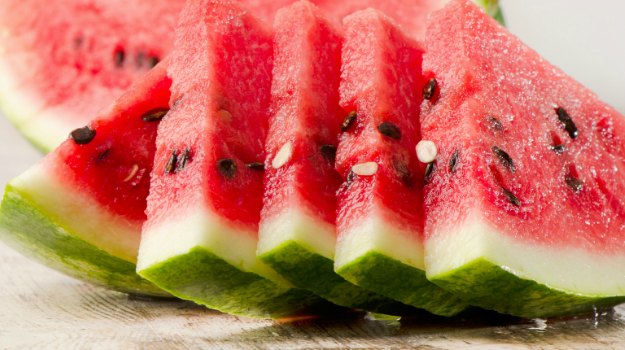
Hungarian producers are expected to begin delivering watermelons to Lidl Hungary’s logistics centers on June 24. After that, Hungarian watermelons will gradually replace imported products, and domestic produce will be used to meet consumer demand, said Zita Szlavikovics, Chairwoman of the Board of Lidl Hungary, at a press conference held in Budapest on Tuesday by the Ministry responsible for Agriculture and the Food Economy and the retail chain.
László Búza, State Secretary responsible for the food economy, distribution, and food culture at the ministry, highlighted that watermelon cultivation has a long tradition in Hungary. Thanks to the hard work and perseverance of producers, more than 120 local varieties are grown across the country.
The State Secretary emphasized that the government’s goal is that within ten years Hungary should be home to, among other things, healthier and happier people. Contributing to this objective from the food economy side is one of the key responsibilities of the agricultural ministry.
László Búza also drew attention to the importance of consuming healthy Hungarian fruit.
Zita Szlavikovics recalled that Lidl Hungary’s suppliers cultivate watermelons on more than 600 hectares, and sales volumes have tripled since 2018. Last year, Lidl sold 17,600 tonnes of watermelon in Hungary, representing a 7 percent increase compared to the previous year and marking the company’s highest sales volume to date. Lidl also exported more than 11,000 tonnes of Hungarian watermelon to international markets last year.
She added that Hungary’s watermelon sector has been able to preserve its traditions while also adapting flexibly to modern consumer demands.
The Chairwoman of the Board noted that Lidl aims to work with as many Hungarian producers and manufacturers as possible and to bring more Hungarian products to consumers. As a result of the “Lidl for Hungarian Suppliers” program, the company now cooperates with nearly 500 Hungarian businesses, and around 6,000 domestic products are available in the retailer’s assortment, providing stable market opportunities for Hungarian companies.
The program’s international success and the competitiveness of Hungarian products abroad are reflected in the fact that while products from 36 Hungarian suppliers were available in Lidl stores abroad when the initiative was launched, last year a total of 671 products from 124 Hungarian companies were available in Lidl stores across 28 countries. The total value of Hungarian exports through Lidl exceeded HUF 161 billion, Szlavikovics said.
(MTI)


