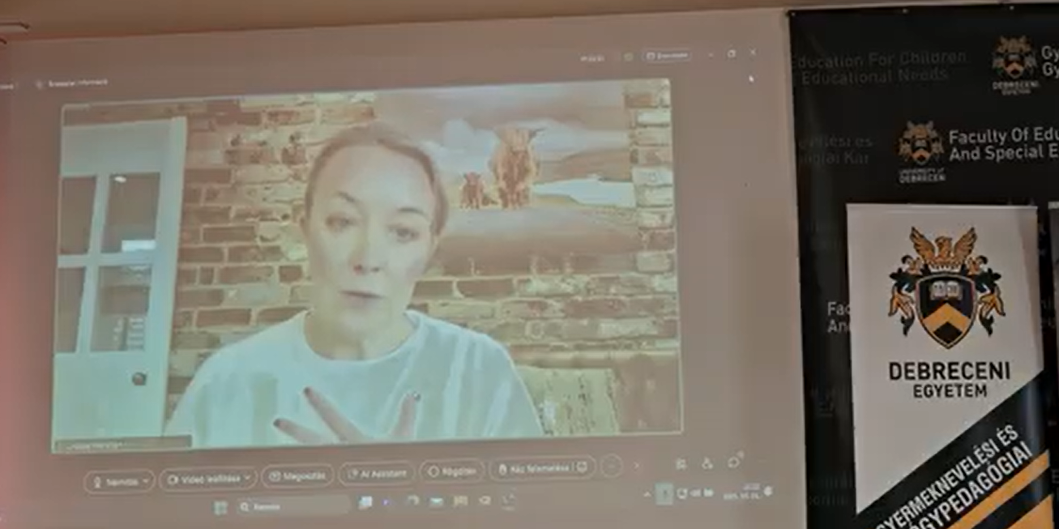
Lindsay Hamilton, Chair in Animal Organization Studies at the University of York, delivered a thought-provoking presentation on the role of animals as active participants in our world and the lessons humans can learn from them. Drawing on over a decade of research in human-animal studies, Hamilton explored how human organizations and societies might rethink their extractive relationship with nature.
Hamilton’s lecture focused on beavers, a species reintroduced in the UK and celebrated as “nature’s engineers.” Beavers transform aquatic habitats by felling trees, creating dams, and slowing water flow, which mitigates flooding—a growing concern in the context of climate change. Hamilton emphasized that observing such species offers a different perspective on interacting with the environment: unlike humans, who often see natural resources through a lens of extraction and utility, beavers engage with their habitat as an extension of their own bodily and sensory capabilities.
The lecture also addressed broader environmental and ethical issues. Hamilton highlighted the concept of the “poly crisis,” encompassing habitat loss, species extinction, pandemics, and climate change. She argued that traditional anthropocentric approaches are insufficient, and that humanity must shift toward embeddedness within nature, learning from other species rather than assuming dominion over them.
Hamilton further connected this to academic developments, including human-animal studies, multiespecies ethnography, critical animal studies, and plant ethics. She stressed that thriving ecosystems require rethinking human practices—not merely aiming for sustainability, but for flourishing across species. Indigenous knowledge and ethnographic methods, such as animal tracking, provide additional models for coexisting harmoniously with nature.
In conclusion, Hamilton proposed that observing and understanding the task-oriented lives of animals like beavers could inspire human organizations and societies to reduce harm, foster ecological balance, and embrace a more humble, integrated role within the natural world. By doing so, humans may contribute to a thriving planet where multiple species, not just our own, can flourish.