


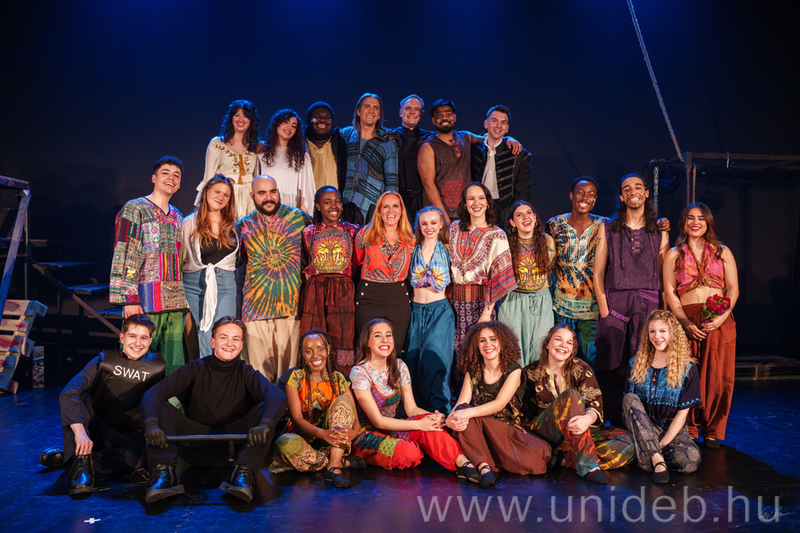
While the original French production tours the world with 200 tons of stage sets, students of the University of Debrecen needed only a few movable pallets—and the immense energy within them—to earn a standing ovation at the oDEon Theatre. On Sunday evening, Notre-Dame de Paris revealed a different face: one where the talent of young people from diverse cultures became the most important spectacle.
Notre-Dame de Paris is not just a play, but one of the greatest milestones in musical history. After its 1998 Paris premiere, the work by Richard Cocciante and Luc Plamondon entered the Guinness World Records, while the iconic song Belle is often cited as one of the best French songs of the twentieth century. While the original production conquered the world with monumental staging—including massive moving bells—something entirely different, yet equally magical, happened in Debrecen.
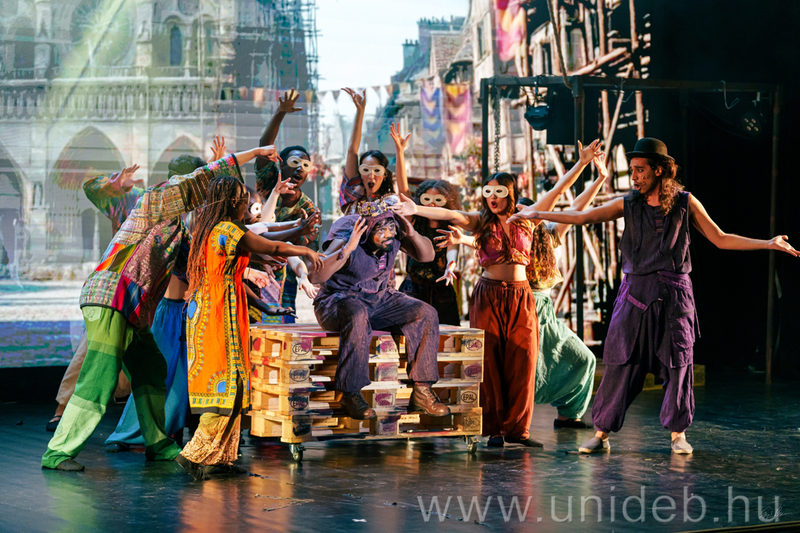
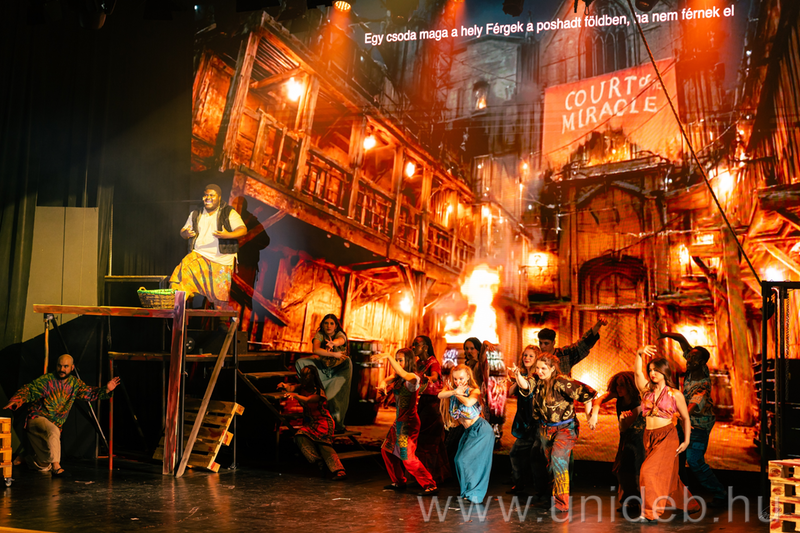
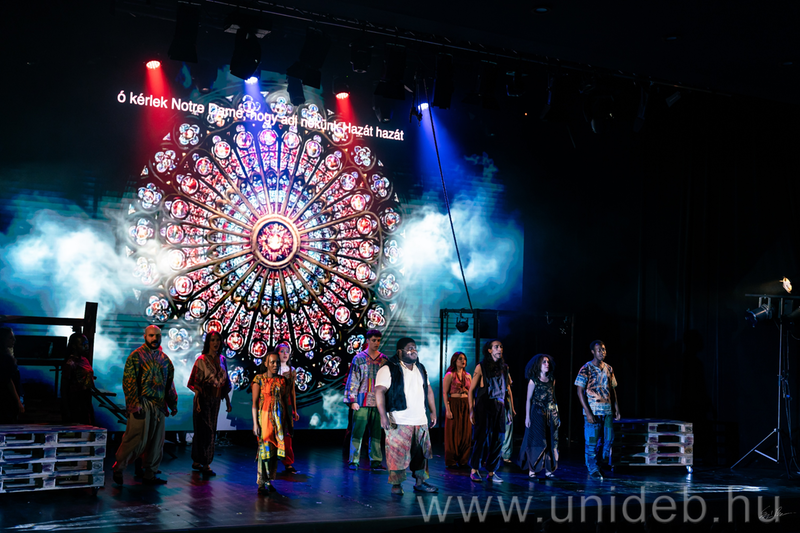
On the oDEon stage, the set consisted of a giant LED wall and a few creatively arranged movable pallets. This minimalism did not detract from the experience—on the contrary, it further highlighted the actors’ performances and the power of the fully musical script.
The production is especially notable because it was created by the university’s unique English-language oDEon Theater Evenings course, which proved so popular that all places were filled within minutes of announcement. Even after expanding capacity, many students were unable to join—but they filled the audience seats instead. The play was directed by Csáki Szabolcs, who also appeared on stage as the Poet, bringing together this diverse international cast.
After the premiere, Esmeralda—portrayed by an Egyptian chemical engineering student—radiated happiness.
“I’m very glad we could do this—it was great fun! Although I hadn’t sung in theatre before, music has always been part of my life. We practiced a lot with Szabolcs and Veronika, the theatre’s director. This is my first year here as a student and my first play in this theatre—an unforgettable experience,” said Lamar Mostafa Bayoumy.
The dark and brooding Frollo was played by a young Russian actor, who spoke with tired but satisfied enthusiasm.
“I’m excited and a bit tired right now. It will take some time for the experience to settle. We prepared intensively for about two months, so it was a very fast-paced production. Since I had sung here before, I was invited to take the role, and I’m glad I accepted,” said Belyaev Nikita.
Audience reactions were unanimously positive.
“The performance was incredible. The choreography, the set, and the mindset of the performers amazed me,” said one African student.
“I’ve seen the original French production, and this adaptation was very similar in atmosphere. It was fantastic to see our fellow students convey this emotional story so professionally,” noted a Dutch student, highlighting the authenticity of the acting.
Although the performance was subtitled in Hungarian, its power transcended language barriers: the striking choreography and iconic melodies captivated the audience together. At the end of the story—about perseverance and self-sacrifice—the standing ovation and cheers made it clear that this story resonates with the soul in every culture.
Cast:
Anikori Eminence Mehabor, Szabolcs Csáki, Cosmas Mutembei, Ghania Durrani, Bíborka Hamvas, Ádám Horváth, Gergő Ferenc Hüse, Tamás Hunyadi, Judy Ahmed, Asiimwe Stephanie Kasabiiti, Keith Rosh, Csaba Kósa, Lara Kovács, Lampejo Oyindamola, Mbinya Kate, Lamar Mostafa Bayoumy, Dávid Alex Nagy, Anna Nyisztor, Reine Azar, Richiello Martín, Nuha Sahlieh, Ania Hattar, Illa Török, Udeme Ebong, Csenge Zsákai, Kincső Zsákai, Belyaev Nikita, Peter Girgis
(unideb.hu)


