


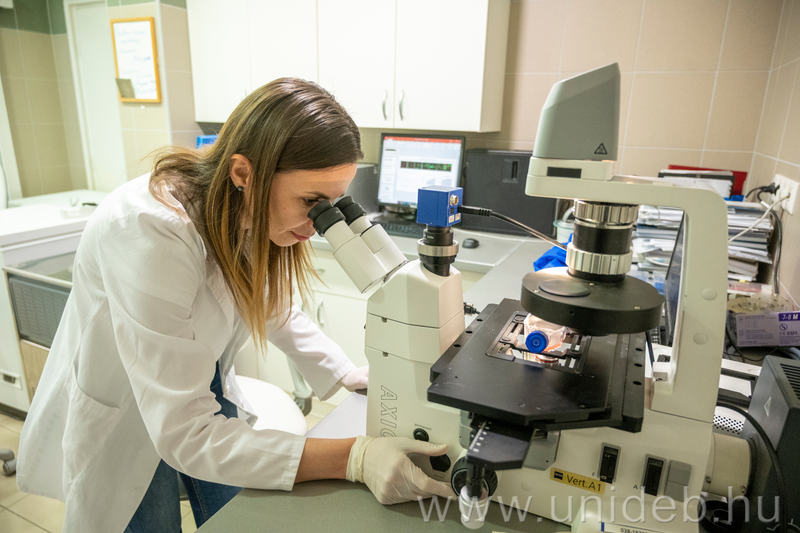
Researchers at the Faculty of Dentistry of the University of Debrecen have modified stem cells derived from dental pulp in a way that may help promote the formation of new bone tissue under appropriate conditions. Although the procedure is still in the experimental stage, it could open up new possibilities for dental and trauma-related treatments in the future.
One of the greatest challenges in modern dentistry and traumatology is the replacement of damaged or missing bone tissue. While a variety of bone substitute materials are currently available, they are not always capable of perfectly replicating the natural process of bone regeneration. As a result, intensive research is underway worldwide to develop solutions that utilize the body’s own healing mechanisms to stimulate bone formation.
Stem cells possess the unique ability to transform into different types of cells under suitable conditions. Researchers have therefore long been investigating how these cells can be differentiated into bone-forming cells.
According to Edit Hrubi, Assistant Professor at the Faculty of Dentistry of the University of Debrecen, the recently completed research focused on stem cells derived from dental pulp. These cells can be relatively easily obtained from wisdom teeth removed for other reasons and, under appropriate conditions, are capable of transforming into bone-forming cells.
During the study, the researchers introduced genetic information into the stem cells that enables them to produce proteins involved in bone formation. The modified cells are capable of producing a heterodimer protein known as BMP-2/7.
“We regulate the protein production of stem cells isolated from dental pulp using a kind of on-off switch system. The cells only begin producing the BMP-2/7 heterodimer when doxycycline, a well-known antibiotic, is added to them. This could provide an opportunity in the future to more precisely control when and to what extent bone formation is initiated,” explained Edit Hrubi.
The technology is currently still in the experimental phase. BMP homodimer proteins (BMP-2 and BMP-7) are already used in certain bone surgery procedures, but experience has shown that high doses can cause serious side effects, including excessive bone growth and inflammatory reactions.
“Dental pulp-derived stem cells may become one of the key foundations of regenerative medicine in the coming years. In the longer term, this procedure could create new opportunities in dentistry and other medical fields as well. The technology could help with bone augmentation before dental implantation or even in the reconstruction of larger bone defects,” the assistant professor added.
The researchers emphasize that there is still a long road ahead before clinical application becomes possible. Further animal studies and human clinical trials will be necessary to demonstrate the safety and effectiveness of the procedure.
The research group at the Faculty of Dentistry has several years of experience studying growth factors that promote bone formation, particularly BMP proteins, as well as various scaffold systems. The team plans to expand its work through in vivo experiments in the near future.
Hrubi noted that the research team was led by Csaba Hegedűs, Professor at the Faculty of Dentistry. The project was carried out in collaboration with József Tőzsér, Professor at the Institute of Biochemistry and Molecular Biology of the Faculty of Medicine; Gergely Nagy, Research Fellow at the Faculty of Medicine; and Ferenc Tóth, a former staff member of the Faculty of Dentistry.
In recognition of the discovery, the research group received a Publication Award from the Count István Tisza Foundation for the University of Debrecen and the University of Debrecen. The scientific paper describing the research was published in the journal Biomolecules.
(unideb.hu)


