


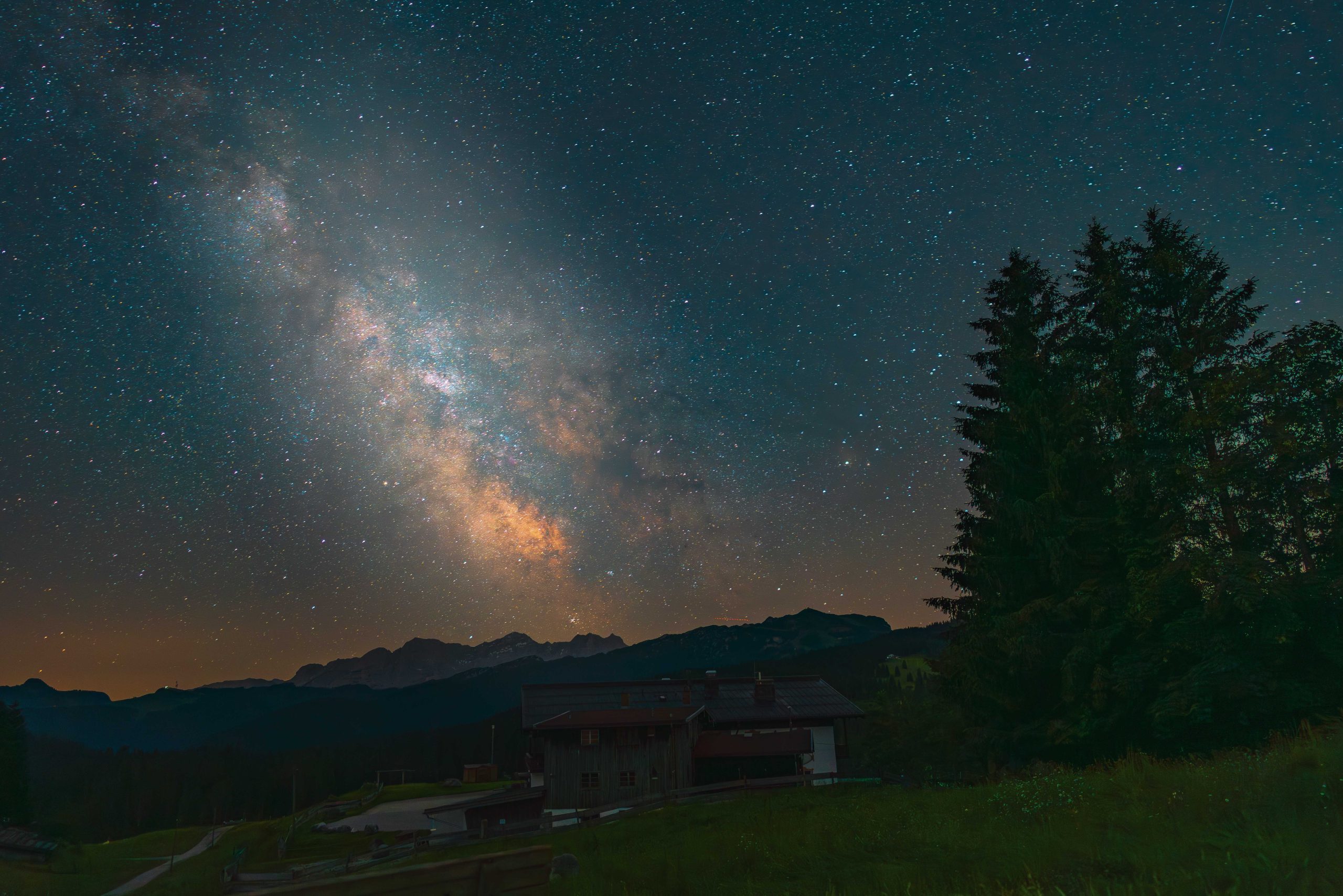
Two meteor showers, the Southern Delta Aquariids and the Alpha Capricornids, will reach their peak activity during the night of 30–31 July, with an expected 10–15 meteors per hour, according to a statement issued by the Svábhegy Observatory.
According to the observatory, the Southern Delta Aquariids are known for their fast-moving meteors that leave delicate streaks of light across the sky. The Alpha Capricornids, although less frequent, are famous for producing bright fireballs that can remain spectacular even under the strong light of the nearly full Moon.
No telescope or binoculars are needed to enjoy the meteor showers. The phenomenon can be observed with the naked eye from a location free of light pollution and obstructions.
However, the observatory noted that the low position of the meteor showers’ radiant points and the almost full Moon will reduce visibility, meaning observers are likely to see around 10–15 shooting stars per hour, fewer than the showers’ theoretical maximum.
The Alpha Capricornid meteor shower was discovered in 1871 by Hungarian astronomer Miklós Konkoly-Thege in Ógyalla (now Hurbanovo, Slovakia).
Konkoly-Thege founded the institute that later evolved into today’s HUN-REN Research Centre for Astronomy and Earth Sciences, whose Konkoly Thege Miklós Astronomical Institute operates the Svábhegy Observatory.
The observatory will also host a special public programme on the night of the meteor shower peak.
The evening will begin with interactive astronomy activities followed by a musical performance by Szabolcs Kövi. Visitors will then have the opportunity to observe the night sky through telescopes. Further details about the event and the meteor showers are available on the observatory’s official website.
(MTI)


