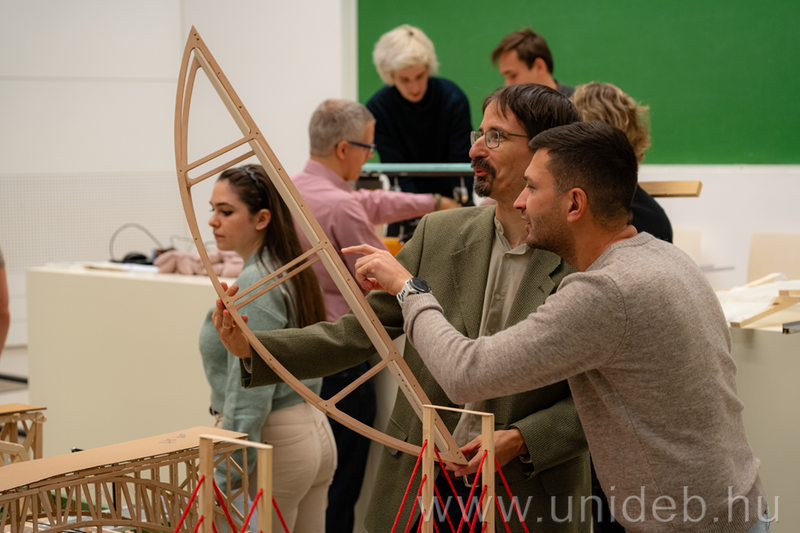
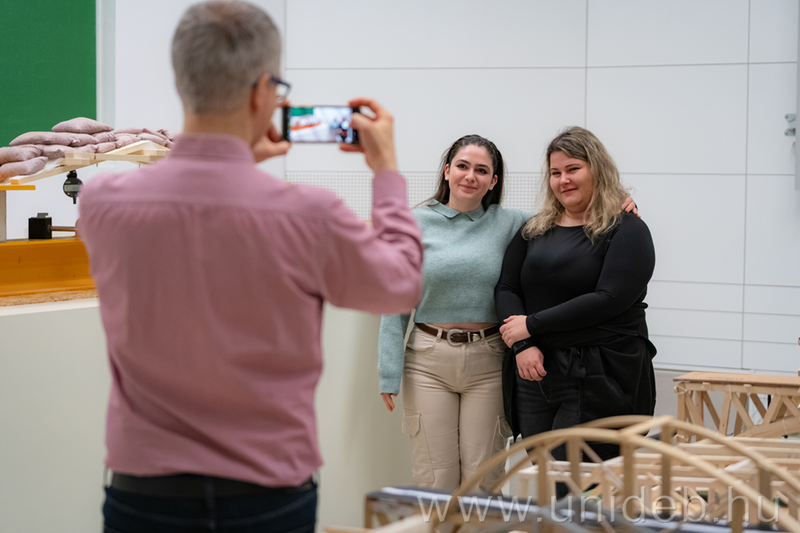
On Thursday, at the Faculty of Engineering, the jury tested 26 different bridge models created by BSc final-year students during the first semester. Increasing weights were placed on the models to measure how much they bent under the load and when, if at all, they broke. The best models could potentially function as real bridges.
Students in both Hungarian and English-language civil engineering programs explored their creativity and imagination in the Bridges and Structures course. In September, they were tasked with designing individual or paired bridge models using any materials, with a one-meter span and a 13-centimeter-wide deck, capable of withstanding loads. The models had to meet proportional requirements similar to those of real bridges.
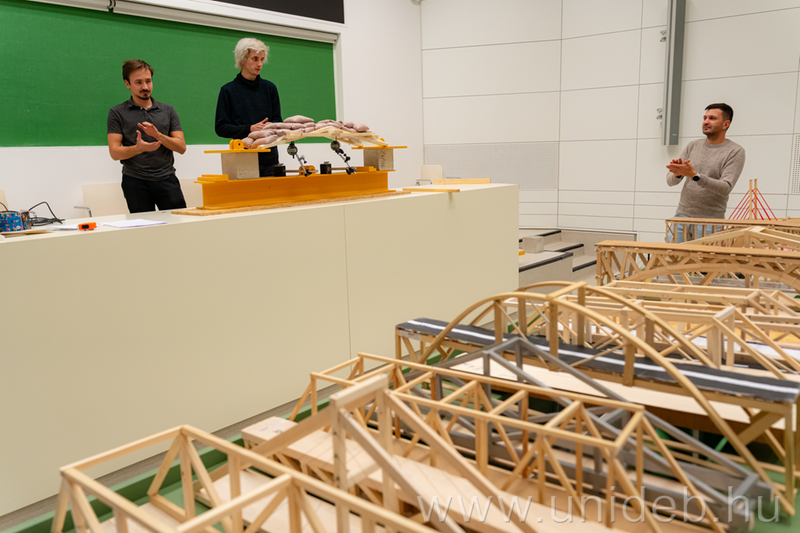
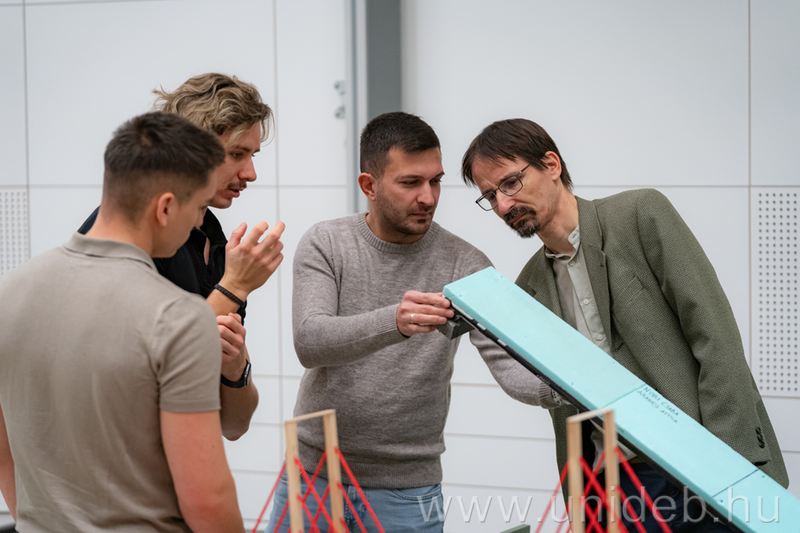
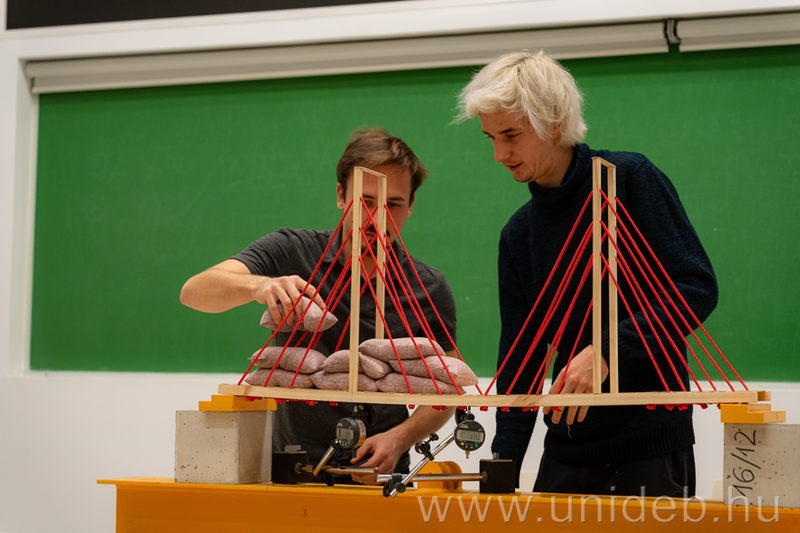
Ádám Ungvárai, faculty engineer at the Department of Civil Engineering, noted that wood was the most commonly used material, though some students used metal sheets, steel fibers, insulation material, or carbon. Two students created plastic bridge elements with a 3D printer and assembled them.
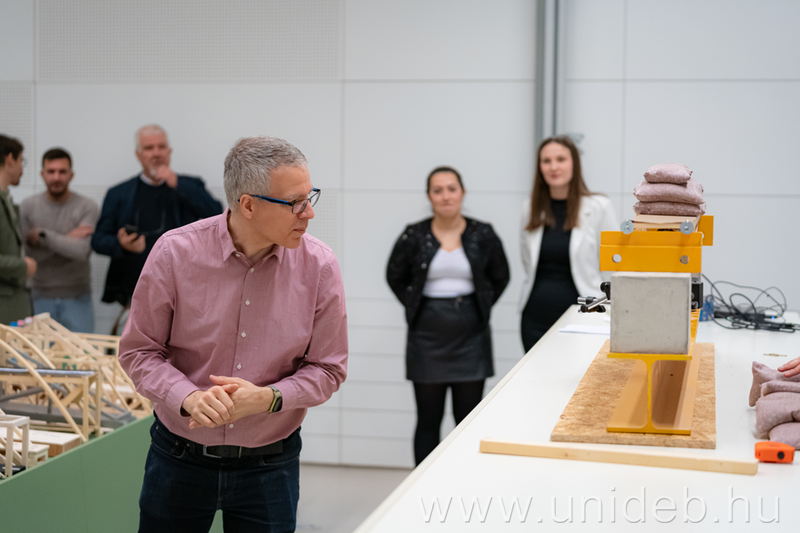
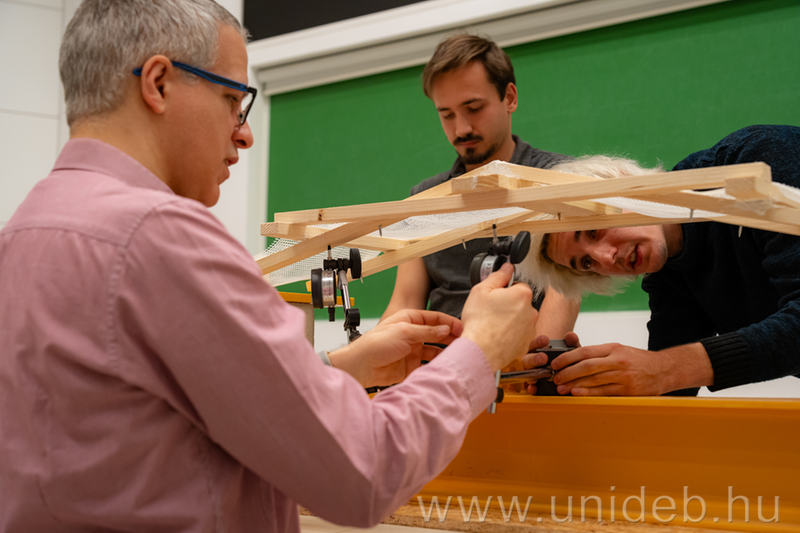
During the tests, weights totaling 53 kilograms were gradually placed on the models while sensitive instruments measured bending and recorded when weaker models failed. This load roughly corresponds to the weight of trucks loaded with stones on a bridge before its official opening.
“The jury focused particularly on the structural framework and statics. Compared to previous years, there were far fewer truss bridges and more alternative designs. One student submitted a so-called Leonardo bridge model, named after Leonardo da Vinci, who first conceptualized it. We had not seen this type or 3D-printed models in previous competitions,” Ungvárai explained.
Bridge design requires precise calculations of deflection, which, according to standards, may be up to one-fourth of a percent of the span—equivalent to 2.5 millimeters in these models.
“With the weight tests, we primarily assess how accurately this has been achieved. The jury of four, including university and industry experts, scored the models based on deflection, self-weight, aesthetics, and creativity, determining the students’ grades,” Ungvárai said.
According to the engineer, the best models are structurally stable enough to be built at full scale using durable materials.
(unideb.hu)