Debrecen has rapidly become one of Central Europe’s most important automotive hubs, driven by major industrial investments led by the BMW Group. The city’s transformation is reshaping employment, education, mobility, culture, and regional development. To understand these changes, the University of Debrecen has launched DEB AUT, a multidisciplinary research initiative running until 2030. The program examines the technological, economic, and sociocultural impacts of the automotive sector’s expansion—and its findings will guide the city, the university, and industry leaders for years to come.
A New Era for Debrecen’s Economy
At the program’s opening conference, University of Debrecen Rector Zoltán Szilvássy emphasized that BMW’s arrival has had a profound impact on the city and the region—one that was evident even before construction began.
“Debrecen and BMW began to merge long before the first groundbreaking,” he noted. “We are now in the middle of a socio-economic, industrial and emotional transformation with enormous responsibility for local and national development.”
The rector highlighted that not only German investment has arrived: Chinese companies have also become major players in Debrecen’s industrial growth. This makes academic analysis essential, he said—uniting humanities scholars, scientists, and economic experts to understand the city’s transformation.
University Expansion and Innovation
University Chancellor Zoltán Bács pointed out that the institution has grown from around 40,000 students and employees to more than 50,000 in just a decade. Alongside its educational mission, the university now plays a central role in supporting local economic development.
The university has introduced a new operational model, expanded its research and innovation strategies, and is building major facilities—such as new centers for sports, music, and social innovation in the UD Science, Technology and Innovation Park.
A City in Its Third Great Growth Period
Mayor László Papp described Debrecen’s history in three major growth cycles:
-
the late 19th century industrial boom,
-
the 1960s–1970s industrialization,
-
and the current transformation beginning in the mid-2010s.
He expects the present cycle to define the city until the early 2030s.
“All major development waves reshaped Debrecen’s population, infrastructure, architecture and regional influence,” he said. “The changes we see now will have similar long-term effects.”
The DEB AUT research initiative will help decision-makers understand how economic development will reshape mobility, infrastructure, education and services—and which strategic directions the city should support.
BMW: More Than a Factory
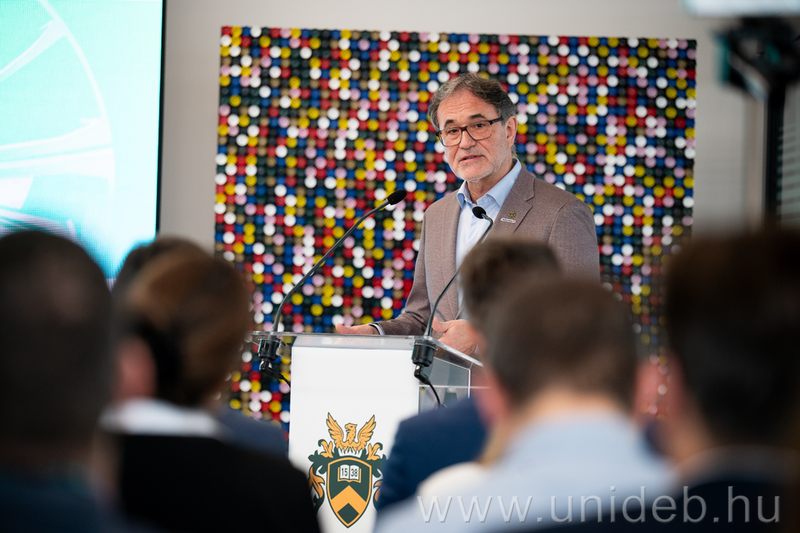
BMW Group Plant Debrecen President & CEO Hans-Peter Kemser stressed that BMW’s presence is built on long-term partnership.
“BMW is not just a plant outside the city. We are part of this community—we are neighbors, colleagues and partners,” he said. “Our success is inseparable from the success of the region.”
Kemser highlighted four key areas where cooperation is already shaping the future:
1. Economic Development
BMW aims to build a new industrial ecosystem centered on electrification, digitalization and innovation.
New suppliers have arrived, local engineering capacities are growing, and an interconnected network now links the university, the city and industry players.
2. Regional Connectivity
Employees commute from dozens of communities across three countries. BMW’s transportation network creates new mobility links, supporting small towns and improving access to jobs.
“Modern industry must help build bridges,” Kemser said.
3. Education and Knowledge
BMW collaborates with eight of the university’s 13 faculties, creating new study programs in electromobility, artificial intelligence, automotive engineering and digital manufacturing.
New labs and joint research initiatives help position Debrecen as a rising European knowledge center.
Dual training programs give young people real industrial experience—and support long-term career building in the region.
4. Social and Cultural Development
More than 50 nationalities are represented at the plant, enriching both BMW and the city with new culture and perspectives.
BMW also supports local cultural, sports and educational initiatives to help build a vibrant, open community.
“Our commitment is long-term,” Kemser emphasized. “We came here not only to build a plant, but to shape the future together with the university, the city leaders and local communities.”
What DEB AUT Aims to Understand
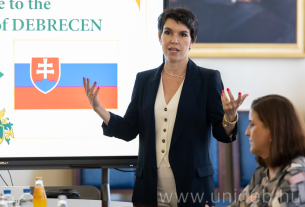
Program leader Andrea Horváth, director of the Institute of German Studies, explained that DEB AUT brings together researchers from the humanities, economics, natural sciences and soon engineering disciplines as well.
The project explores how the current transformation fits into Debrecen’s centuries-long development, and how society, culture and the economy are being reshaped.
“Debrecen is becoming a European center of sustainable electromobility, digital production and international work culture,” she said. “We want to understand what makes the city a place that Europe pays attention to again.”
A Shared Roadmap for the Future
Kemser described the research project as more than analysis—a roadmap for the future.
“It shows where we stand, where new opportunities are emerging, and where deeper cooperation can lead us,” he said. “We are proud to be part of this story—and committed to shaping the next chapter.”
DEB AUT’s findings will be fed back into industry and urban decision-making, supporting long-term planning for a rapidly changing city.